
 By
By 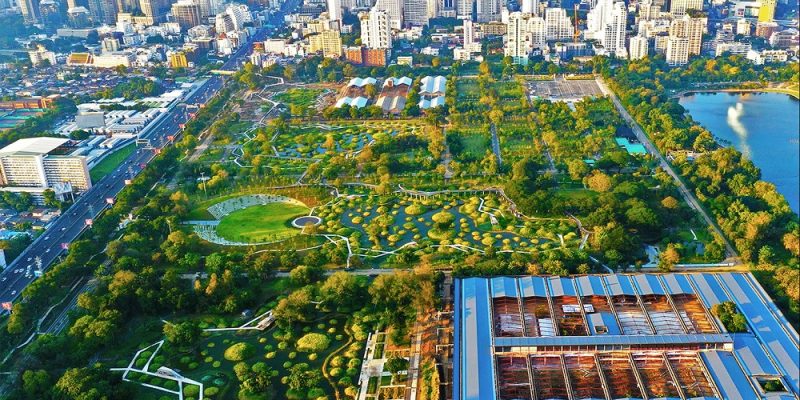
Bangkok will always be a busy, built-up city, and that makes the spaces between its buildings increasingly important. Parks, shaded walkways and planted public areas give people somewhere to exercise, meet friends, sit outside at lunchtime or simply walk for a while without being surrounded by roads and concrete. Plans for lush green areas Bangkok residents can access as part of everyday life are not decorative extras. They are part of making a growing city easier to live in.
Urban green space does not have to mean a large park sitting apart from the rest of the city. It can be connected to offices, shops, public transport, homes and walking routes, so people naturally pass through it during the day. That is what makes the difference between a park that is visited occasionally and outdoor space that becomes part of ordinary life.
For someone working nearby, a shaded route can make a lunchtime walk realistic rather than something to put off until the weather improves. For families, open space gives children room to move around without every outing needing to be indoors. For people living in high-rise buildings, it offers a nearby place to sit, walk, cycle or spend time outdoors without travelling across Bangkok to find it.
This is particularly relevant in central Bangkok, where development needs to make room for people as well as buildings. A new urban park on Rama IV covers over 50 rai and is designed to connect with Lumphini Park and Benjakitti Park. That connection matters because green space becomes far more useful when it forms part of a wider route through the city rather than standing alone as a single isolated destination.
Trees and planting also affect how outdoor areas feel in daily use. A paved walkway in full sun may look attractive on a site plan but remain empty for much of the day. Shade trees, rest areas and water features can make walking or sitting outside far more comfortable in Bangkok’s heat. This is the practical side of urban nature. People use a public space when it actually suits the weather and the way they move through the city.
Green areas also create room for different types of activity to happen side by side. One person may be passing through on foot, another may be exercising, while groups meet for an outdoor event or spend an evening together. A well-designed public park does not need to dictate one use. It needs enough comfort, access and open space for people to use it in their own way.
Access is part of the equation. Outdoor areas that are difficult to reach or only available for limited hours cannot become a dependable part of city life. A park with pedestrian routes, cycle facilities and round-the-clock access offers far greater value to people whose routines do not fit neatly into one part of the day.
Bangkok’s future will still involve new offices, residences, retail areas and transport links. The question is how much room is left for people to step outside, walk under trees and spend time in a public setting that feels comfortable rather than crowded. When green space is connected, accessible and useful throughout the day, nature is no longer something separate from the city. It becomes part of how the city works.








Comments