
 By
By 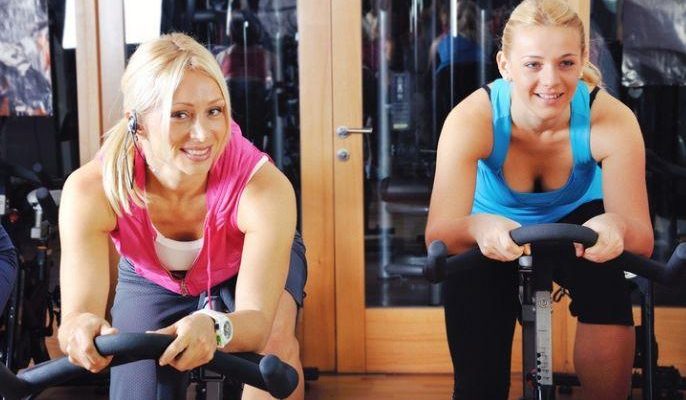
Sitting down feels like recovery because body weight returns to the saddle and the upper body no longer supports a standing climb. Yet cardiovascular recovery depends on more than position. If resistance remains high, cadence stays aggressive, breathing is poorly controlled or the preceding interval was severe, the rider can be seated while internal strain remains elevated.
In an indoor spin class, the recovery interval has a training purpose. It may be designed to lower effort enough to repeat high-quality work, or it may deliberately preserve strain between intervals. Riders need to know which version they are performing. Simply touching the saddle does not guarantee that oxygen demand, heart rate or perceived effort will fall sufficiently.
Position and Workload Are Separate Variables
Standing often increases stabilisation demand, but sitting does not automatically reduce mechanical work. A rider can remain seated at high resistance and cadence, producing substantial power. Another rider can stand with moderate load and create less total demand.
The recovery effect comes from reducing workload to the prescribed level, not from changing position alone. To assess it, consider cadence, resistance or power and RPE together. If the rider sits but leaves the climb resistance untouched, the legs may continue generating enough torque to keep cardiovascular demand high.
This explains why some riders feel that recovery “does not work”. They changed posture but did not unload the bike.
Heart Rate Has Momentum
Heart rate does not instantly mirror the resistance knob. After a hard effort, sympathetic activation, oxygen demand, body temperature and circulating stress hormones remain elevated. Heart rate may continue rising for several seconds after the work interval ends, especially when the interval was short and intense.
The early recovery value therefore reflects both the preceding effort and the current workload. A rider who panics because heart rate remains high after ten seconds may remove too much resistance, while another may assume no reduction is necessary because sitting feels easier.
Observe the slope instead of demanding an immediate number. Is heart rate beginning to fall within the recovery period? Is breathing becoming more controllable? Is RPE moving down? The trend is more useful than an arbitrary threshold copied from another rider.
Active Recovery Still Requires Work
An active recovery maintains low-intensity movement instead of stopping completely. This can support repeated-effort performance in some contexts, but it also consumes energy. Research comparing active and passive recovery shows that the preferred strategy can depend on recovery duration, intensity and the next task. Active recovery is not synonymous with maximal recovery.
For a spin class, the distinction is practical. If the goal is to maintain warmth and rhythm between threshold blocks, light pedalling may be ideal. If the next interval demands near-maximal power, excessive recovery resistance can compromise the repetition.
The correct active recovery should feel purposeful but clearly easier than the work interval. The rider should regain control of breathing and reduce local muscular tension without allowing the legs to stop abruptly.
Residual Resistance Is the Most Common Error
After a climb, riders often reduce cadence but forget to release enough resistance. Lower cadence can make the bike feel calmer even while torque per stroke remains high. The quadriceps continue working, heart rate stays elevated and the next interval begins with incomplete recovery.
A better sequence is to reduce resistance first, settle into a comfortable cadence and then assess breathing. Small adjustments are preferable because removing all load can make the flywheel unstable and disconnect the rider from the bike.
The instructor can cue an outcome rather than only a knob turn: “Find a load that lets your shoulders soften and your breathing move from urgent to controlled within the next 30 seconds.” That cue adapts to individual bikes and fitness levels.
Breathing Can Preserve or Reduce Strain
After intense work, some riders continue breathing rapidly and shallowly through an elevated chest. Others hold their breath while adjusting the bike or drinking. Both strategies can delay the subjective feeling of recovery.
The objective is not to impose a rigid breathing count. Riders should first stop gripping, allow the ribcage to move and complete a fuller exhalation. Longer, controlled exhalation can help shift attention away from panic and restore a more efficient rhythm.
If a rider cannot speak a short phrase by the end of a recovery intended to be easy, the workload may still be too high or the interval may be too short for the preceding effort. This observation should guide the next repetition.
Recovery Duration Changes What Is Possible
A 20-second recovery cannot deliver the same restoration as two minutes. In short recoveries, heart rate may remain deliberately elevated while the rider regains only enough local control to repeat the task. Longer recoveries allow greater cardiovascular and perceptual reduction.
This is why riders should not judge every recovery by how low heart rate falls. The correct question is whether recovery is sufficient for the next interval’s intended quality. If output collapses, technique deteriorates or RPE rises disproportionately across repetitions, recovery may be too demanding for the rider’s current capacity.
The class design might intentionally create cumulative strain. In that case, the rider should scale the work intervals instead of secretly turning recovery into complete rest and changing the session structure.
Heat and Hydration Influence Heart-Rate Recovery
As body temperature rises, the cardiovascular system supports heat dissipation as well as working muscles. Heart rate may remain higher at the same external workload. Singapore’s climate can contribute before the rider enters the studio, particularly after a warm commute.
Hydration status, caffeine, stress, illness and medication can also affect heart-rate behaviour. One elevated recovery reading does not prove poor fitness. Repeated patterns under comparable conditions are more informative.
Riders with chest pain, faintness, unusual breathlessness, palpitations or other concerning symptoms should stop and seek appropriate medical evaluation. Class data cannot diagnose cardiovascular health.
Use a Three-Signal Recovery Check
At the midpoint and end of recovery, assess three signals:
Mechanical Signal
Is resistance low enough to create smooth, light-to-moderate force rather than another climb? If power is displayed, is it clearly below the work interval?
Physiological Signal
Is heart rate trending down, or at least stabilising when the recovery is intentionally short? Is breathing becoming more controlled?
Perceptual Signal
Has RPE fallen by the amount needed to start the next effort with confidence and good technique?
When all three move in the intended direction, seated recovery is working. If only posture changed, it is not yet a complete recovery adjustment.
Preserve Repeatability Across the Set
The quality of recovery appears in the next interval. Compare cadence, power, posture and RPE across repetitions. If the first two efforts are strong but the final intervals collapse, the rider may have started too hard, recovered too intensely or both.
Rather than adding more passive rest immediately, test a modest reduction in recovery resistance. If quality improves without making the set easy, the adjustment was appropriate. If fatigue still accumulates rapidly, reduce work intensity or revise pacing.
The interval, endurance and zonal cycling options at TFX Singapore provide different recovery demands. Riders should listen for the objective of each block and avoid applying the same recovery load to every class format.
Sitting Is a Position, Recovery Is a Process
Effective recovery combines lower mechanical demand, controlled breathing, appropriate duration and realistic expectations after the preceding effort. The saddle can support the rider, but it cannot turn heavy resistance into rest.
The next time heart rate remains high while seated, do not assume the body is failing to recover. Check whether the bike has actually been unloaded, whether cadence is still demanding and whether the recovery was designed to lower strain or preserve it.
Frequently Asked Questions
Why does my heart rate rise after the interval ends?
Heart rate can lag behind rapid workload changes. It may continue rising briefly because the cardiovascular response to the preceding effort has not yet peaked.
Should I remove all resistance during recovery?
Usually not. Keep enough load for controlled pedal contact, but reduce it sufficiently to achieve the recovery goal. An almost unloaded flywheel can encourage bouncing or unstable cadence.
Is passive recovery better than active recovery?
Neither is universally better. The choice depends on interval intensity, recovery duration and the quality required in the next effort. Follow the session design and scale appropriately.
How do I know whether recovery was sufficient?
The next interval should begin with controlled breathing and stable technique. If output and form repeatedly collapse, review work pacing, recovery resistance and recovery duration.







Comments